 MealMuse
Mushroom japchae with glass noodles & egg
Korean-inspired · Korean japchae inspiration, with mushrooms and egg, and a less-sweet dressing that omits the usual sugar.
Korean-inspired sweet-potato glass noodles tossed with separately cooked vegetables, shiitake and egg ribbons in a savory sesame dressing without added sweetener.
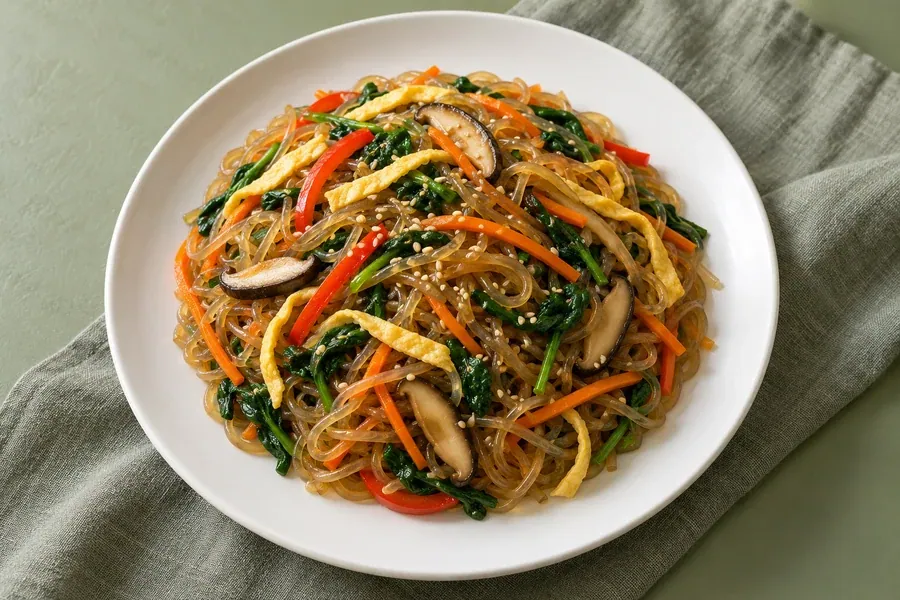
How to make mushroom japchae with glass noodles & egg
Before you start
Ingredients are scaled for 4. Measure these amounts first. Use a wider pan or batches for larger portions.
- Drain the greens
Wash the leaves and drain well. Keep them separate from firm vegetables so they can go in near the end; excess rinse water can dilute the sauce.
- Measure before heating
Measure the listed oil first. Where the method uses half or the remaining oil, divide that measured amount rather than adding an extra full measure. Have a small jug of water ready for any splash the method calls for.
- 1
Cook glass noodles
Boil dangmyeon in ample water for the packet time, usually 6-8 minutes. Drain; rinse only if directed. Cut long noodles with clean scissors and toss with half the sesame oil.
What to look forNoodles are translucent and elastic with no hard center.
Wheat noodles need different timing.
- 2
Make egg ribbons
Beat eggs with half the salt. Brush a skillet with one third of the olive oil. Cook thin omelets over medium-low heat until set and 71°C / 160°F. Transfer to a clean board and slice into ribbons.
What to look forNo liquid egg remains.
Cook in batches for thin strips.
- 3
Saute vegetables
Using remaining olive oil in small additions, saute onion and carrot for 4-5 minutes, pepper for 3 minutes, then shiitake for 6-8 minutes. Transfer each batch to the noodle bowl.
What to look forMushrooms are cooked; vegetables retain their shapes.
Separate batches prevent watery noodles.
- 4
Wilt spinach
Wilt spinach and chopped garlic in the skillet for 2-3 minutes with remaining salt. Evaporate excess liquid, then add to the bowl.
What to look forSpinach is wilted without free liquid.
Drain excess moisture before mixing.
- 5
Toss and serve
Add soy sauce, remaining sesame oil, sesame seeds and egg ribbons. Toss gently; warm in the skillet in batches for 1-2 minutes until hot. Serve immediately.
What to look forNoodles are glossy, without a sticky glaze.
Use unsweetened sauce; this adapts traditional sweet japchae.
Tips & troubleshooting
The sauce is too thick or too thin
If it catches before the ingredients finish cooking, reduce the heat and stir in water a spoonful at a time. If too thin, simmer gently uncovered, stirring and checking often. Remove cooked delicate ingredients first if further simmering would overcook them.
Plan, shop & keep this dinner
Cooking sequence
This is a batch-by-batch skillet dinner: noodles, omelet ribbons and vegetables are prepared separately before tossing. Chop everything before starting and keep a large mixing bowl ready.
Choose the right ingredients
Choose Korean sweet potato starch dangmyeon and the listed fresh shiitake. Dried mushrooms need separate rehydration and different purchasing weights.
Prepare ahead
Slice the vegetables and mix the measured seasonings ahead. Cook and drain each component well so the final bowl is glossy rather than watery.
If the texture is not right
Use clean scissors to shorten strands that are difficult to toss. If vegetables release water, cook it off before combining; warm the final mixture in batches instead of crowding the pan.
Storage & reheating
Pack noodles and vegetables promptly in shallow containers. Reheat gently with a small splash of water and toss to separate the strands; the noodles firm up when chilled.
Refrigerate perishable leftovers promptly in shallow containers. Reheat hot leftovers to 74 C / 165 F throughout. Follow any shorter recipe or package limit. See USDA leftover storage guidance and reheating guidance.
Need a hand at the stove?
Find a practical next step for this dinner.
Why your stir fry is watery, and how to fix it
Read the guideHow to stop food sticking to a stainless steel pan
Read the guideRecipe references
Page information updated .
More dinner ideas
Explore dinners with similar ingredients, cuisine or dinner type.
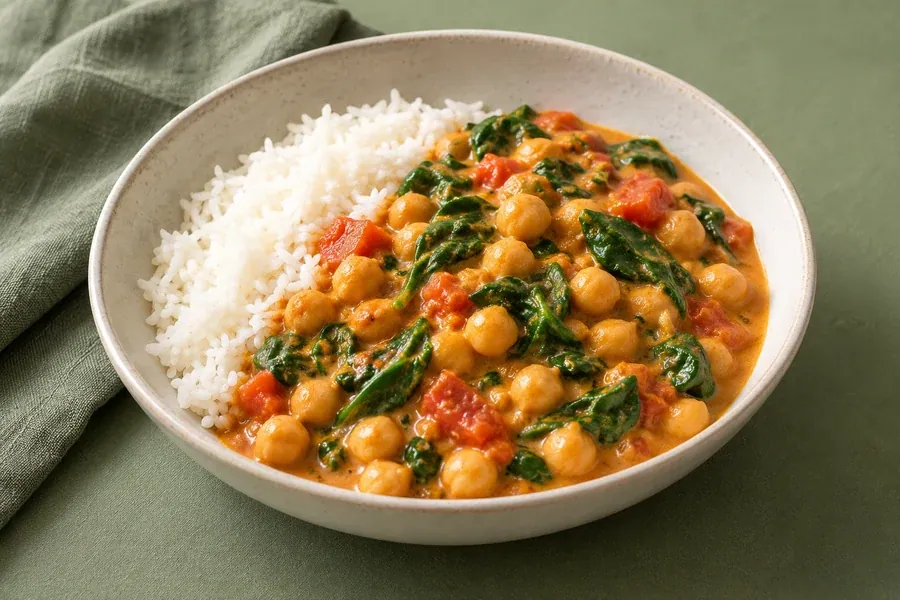 Chickpea spinach curry
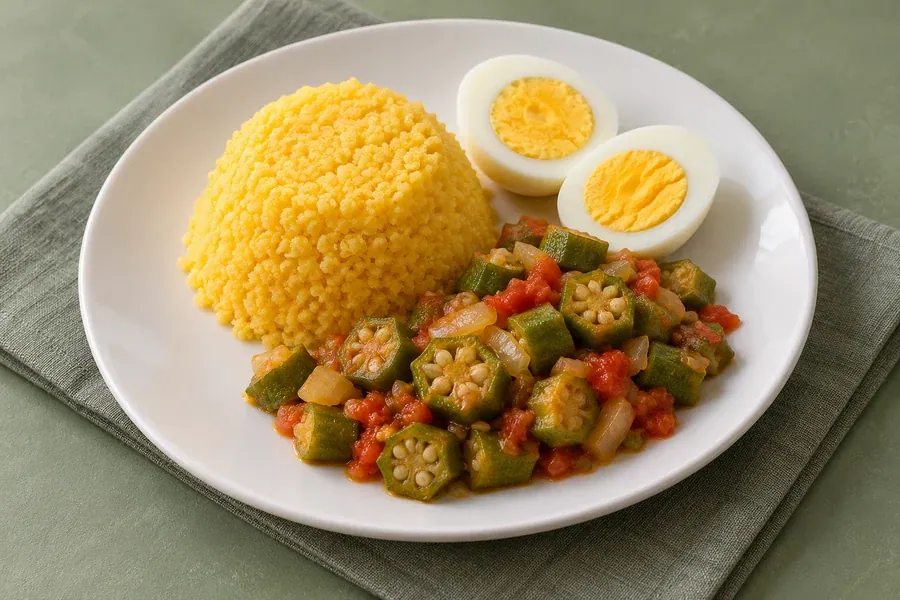 Corn cuscuz with okra & eggs
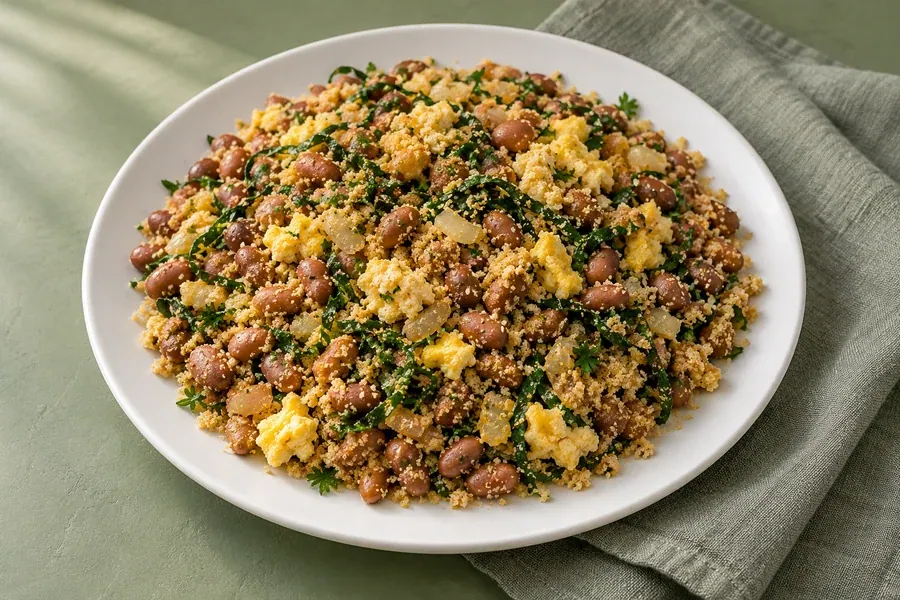 Vegetarian feijao tropeiro with collards & egg