 MealMuse
Vegetarian feijao tropeiro with collards & egg
Brazilian-inspired · Minas Gerais feijao tropeiro inspiration; an explicitly vegetarian adaptation without the usual cured pork.
Explore the Brazilian dinner week
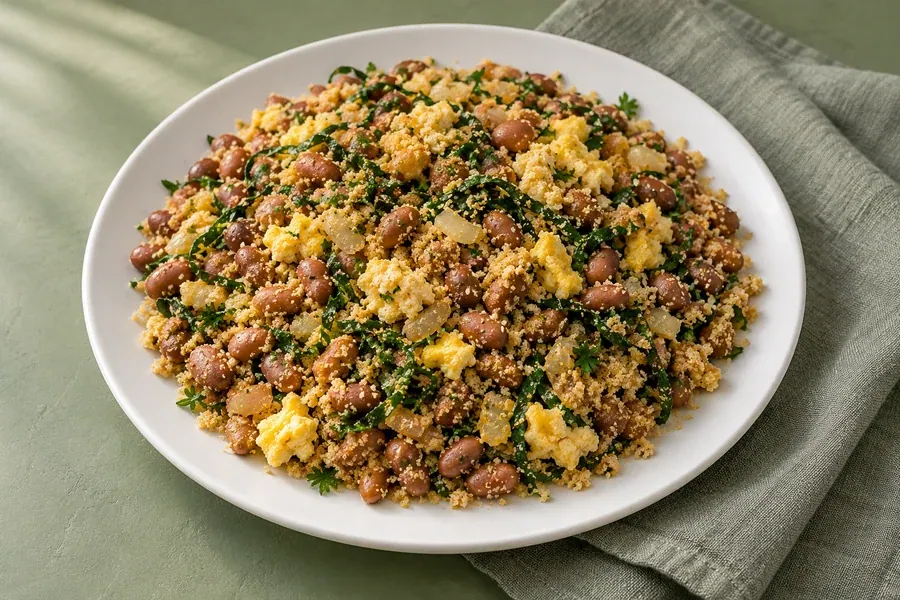
A Minas Gerais-inspired dry bean skillet with toasted cassava flour, ribbons of collards and scrambled egg, without bacon or sausage.
How to make vegetarian feijao tropeiro with collards & egg
Before you start
Ingredients are scaled for 4. Measure these amounts first. Use a wider pan or batches for larger portions.
- Measure before heating
Measure the listed oil first. Where the method uses half or the remaining oil, divide that measured amount rather than adding an extra full measure. Have a small jug of water ready for any splash the method calls for.
- 1
Prepare beans and greens
Drain and rinse the canned beans thoroughly. Slice washed collards into thin ribbons. Check the cassava product is toasted coarse farinha de mandioca, not tapioca starch or raw cassava flour.
What to look forBeans are drained and greens are finely cut.
The toasted coarse product creates the characteristic loose crumb.
- 2
Cook the collards
Heat half the oil in the large skillet. Soften onion for 6 minutes, add garlic for 30 seconds, then collards, listed water and half the salt. Cover and simmer for 8-10 minutes; uncover to evaporate liquid.
What to look forCollards are tender and the skillet is almost dry.
Toast the farinha in the other skillet while greens simmer.
- 3
Toast the farinha
Heat one quarter of the oil in a small skillet. Toast farinha over medium-low heat for 3-4 minutes, stirring constantly, then transfer to a dry bowl.
What to look forCrumbs smell nutty and remain golden, without burnt patches.
Use toasted coarse cassava flour, not tapioca starch.
- 4
Scramble the eggs
Push cooked greens aside. Add the remaining quarter of the oil and beaten eggs to the cleared area. Stir until fully set and 71°C / 160°F, then fold into the greens.
What to look forEgg pieces are set with no runny streaks.
A wide skillet makes room to scramble the egg.
- 5
Finish the dry bean skillet
Add drained beans and remaining salt; stir over medium heat until steaming throughout. Fold in toasted farinha and parsley just before serving. Divide evenly.
What to look forWhole beans and eggs are lightly coated in dry crumbs, not a paste.
If the beans are very wet, evaporate moisture before adding farinha.
Tips & troubleshooting
The sauce is too thick or too thin
If it catches before the ingredients finish cooking, reduce the heat and stir in water a spoonful at a time. If too thin, simmer gently uncovered, stirring and checking often. Remove cooked delicate ingredients first if further simmering would overcook them.
Plan, shop & keep this dinner
Cooking sequence
Drain beans and slice collards first. Toast the farinha in the second skillet while the covered greens soften. Add the crumbs only after beans and egg are hot and excess water has evaporated.
Choose the right ingredients
Choose fully cooked canned pinto beans and plain toasted coarse farinha de mandioca. Weigh beans after draining; dry bean weights cannot replace the listed amount.
Prepare ahead
Wash and finely slice collards ahead, and measure farinha into a dry container. Cook the egg as part of the dinner and keep toasted crumbs dry until the last fold.
If the texture is not right
If the dish turns pasty, the bean-and-greens mixture was too wet or the flour was too fine. Evaporate liquid before adding crumbs; further water makes this dry skillet softer rather than fixing it.
Storage & reheating
For planned extra portions, reserve some toasted crumbs separately and add after reheating the beans and greens. The fully combined dish softens in the refrigerator.
Refrigerate perishable leftovers promptly in shallow containers. Reheat hot leftovers to 74 C / 165 F throughout. Follow any shorter recipe or package limit. See USDA leftover storage guidance and reheating guidance.
Need a hand at the stove?
Find a practical next step for this dinner.
Why your stir fry is watery, and how to fix it
Read the guideHow to stop food sticking to a stainless steel pan
Read the guideRecipe references
Page information updated .
More dinner ideas
Explore dinners with similar ingredients, cuisine or dinner type.
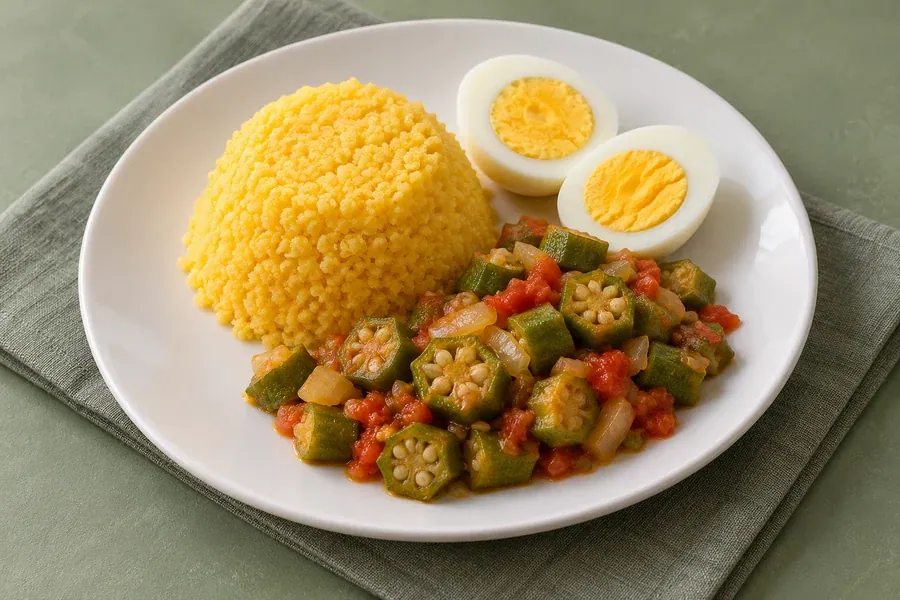 Corn cuscuz with okra & eggs
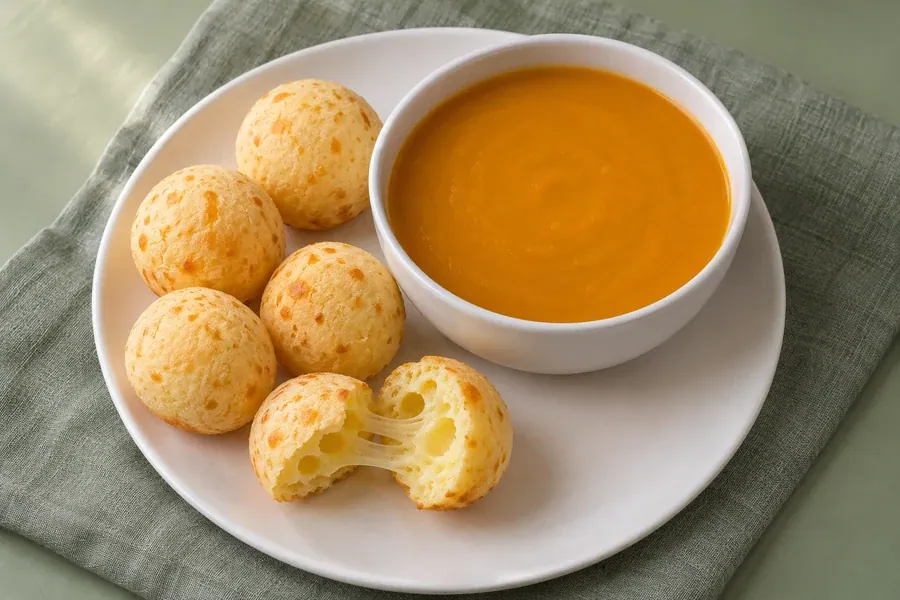 Cheese puffs with pumpkin soup
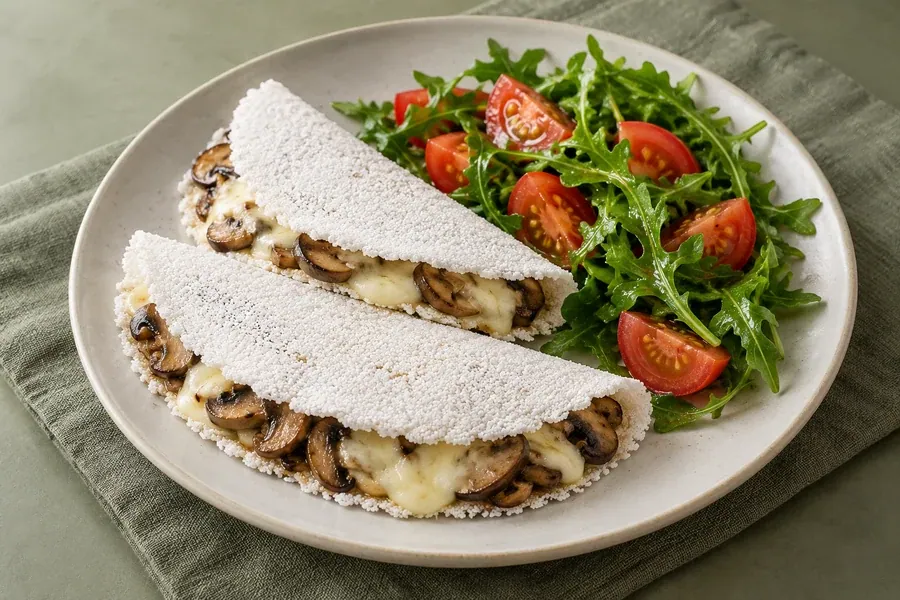 Tapioca crepes with mushrooms & cheese